Why Are Some Adhesive Residues Harder to Remove Than Others?
July 2, 2026
Anyone who has tried removing old sticker residue, tape adhesive, or construction adhesives knows that some residues come off easily while others seem impossible to remove. But why does this happen?
The answer lies in the type of adhesive, how long it has been in place, the surrounding environment, and the surface it is attached to. Understanding these factors can help you choose the right removal method and avoid damaging the surface underneath.
Not All Adhesives Are Created Equal
Different adhesives are designed for different purposes. A simple price tag sticker uses a much different adhesive than industrial tape, construction adhesives, or permanent labels.
Pressure-sensitive adhesives, commonly found on stickers and labels, are designed to stick with light pressure and can often become more difficult to remove over time. Heavy-duty adhesives, such as those found on duct tape, Gorilla Tape®, and industrial labels, are formulated to create stronger bonds and resist environmental conditions.
The stronger the adhesive bond, the more challenging the removal process becomes.
Heat Makes Adhesive Residue Worse
Summer temperatures and prolonged heat exposure can significantly affect adhesive residue.
Heat causes adhesives to soften and spread, allowing them to penetrate deeper into porous surfaces and microscopic imperfections. While this may initially seem like it would make removal easier, it often creates the opposite effect.
As adhesive repeatedly heats up and cools down, they can harden, cure, or leave behind stubborn residue that becomes increasingly difficult to remove. This is especially common with outdoor signage, equipment labels, tape residue, and decals exposed to direct sunlight.
Aging Changes the Adhesive
Time is another major factor.
Fresh adhesive residue is typically easier to remove because the bond has not fully settled into the surface. As adhesives age, they undergo chemical changes that can make them more resistant to cleaning.
Older residue often becomes:
- Harder and more brittle
- More deeply bonded to surfaces
- More likely to leave staining or discoloration
- More resistant to general-purpose cleaners
This is why a sticker removed after a few days may come off cleanly, while one that has been sitting for several years leaves behind a stubborn mess.
Surface Type Matters
The surface underneath the adhesive also plays a major role in removal difficulty.
Smooth surfaces such as glass and polished metal generally allow adhesives to sit on the surface, making cleanup easier. Porous or textured materials can trap adhesive particles, allowing residue to settle into tiny crevices.
Common surfaces that can present challenges include:
- Textured metals
- Painted surfaces
- Brick and masonry
- Plastic materials
- Weathered equipment surfaces
Using aggressive scraping methods on these surfaces can often cause more damage than the adhesive itself.
Using the Right Adhesive Remover
Many household cleaners are not designed to break down industrial adhesives effectively. Instead, they may smear the residue, spread it further, or require excessive scrubbing.
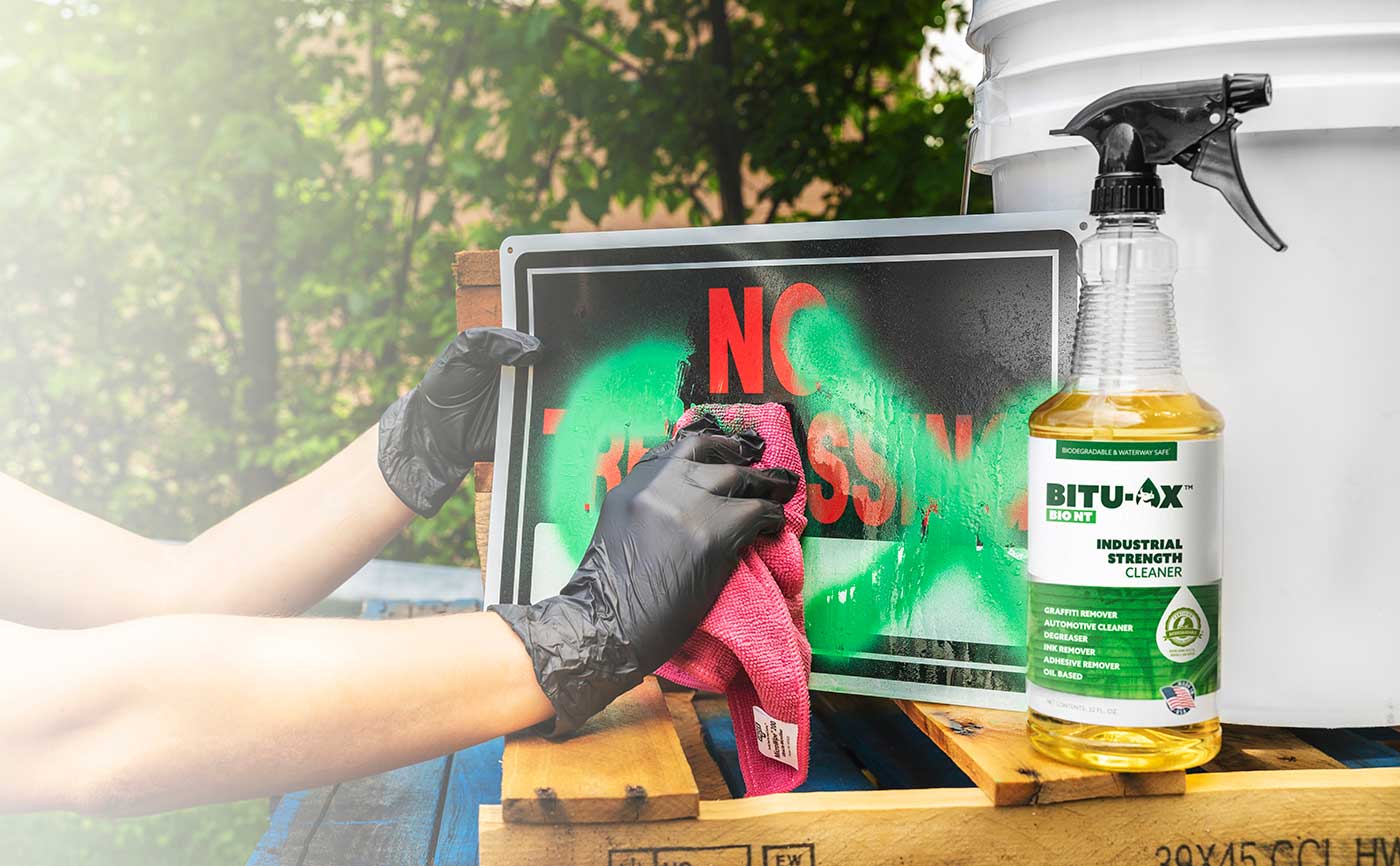
A professional adhesive remover like Bitu-Ox™ Bio NT is designed to break down stubborn adhesives, sticker residue, tape residue, paint, and other surface contaminants while helping protect the underlying surface.
Whether you’re dealing with old labels, tape residue, equipment decals, or industrial adhesives, using the proper remover can save time, reduce labor, and deliver cleaner results.
Looking for an easier way to tackle stubborn adhesive residue? Shop Bitu-Ox™ Bio NT or contact us to learn more.